


Primary School Lesson Plan: All People Are Beautiful by Vincent Kelly
Teach family vocabulary and explore the idea of a family tree through a warm, colourful and inclusive story. Children discover different ways of being a family while learning to describe the people who are special to them. A gentle starting point for celebrating diversity, belonging and the many different shapes that families can take.
Level A1 | Age: 8-10 | Speaking, listening, writing | Family, descriptions, verbs to be/have

Topic: family / describing people
Language skills: speaking, listening, some writing
Soft skills: critical thinking, organizing information, presenting, creating and analyzing
Materials: story book or read-aloud, pictures of different families, board
Setting the scene: the story box
Prepare a story box with pictures of families. Include people with different backgrounds and extended families. It is a nice touch to also include pictures of your own family: you as a child, your parents, grandparents and so on. This makes children bond with you and become more curious about the topic. Introduce the word "family" and elicit all the other words you need to talk about family members (mum, dad, grandma and so on).
Expand vocabulary by introducing short descriptions:
in this picture, my grandpa is tall
in this picture, I have curly hair
Storytime
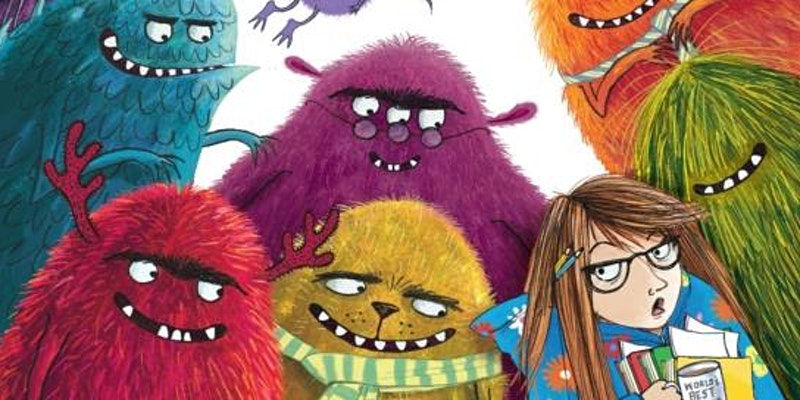
Sit in a circle and start introducing the story by looking at the book cover. Recall vocabulary introduced with the storybox and elicit descriptions. For example:
this child has curly hair
this child is blond
Start reading the story and encourage children to repeat "All people are beautiful" every time you turn the page.
Stop and point to personal features or family members when necessary and elicit relating voacabulary.
Class activities
Activity 1
Skill: critical thinking
Introduce the idea of a family tree. Explain that it is a diagram we use to describe the relationship between people of the same family.
Reproduce the following on the board (alternatively, for better class management, you can make a Canva slide out of it and project it on the board)

Explain to students that you are James, start asking questions about the relationship he has with other family members. For example:
who is John? (A: He is grandpa)
who is Laura? (A: She is mum)
Ask students to create their own (or a fictional) family tree.
Activity 2
Skill: presenting
Explain that when we want to describe people's qualities, we have to use the verb to be (is/are). Write a list of qualities on the board: short/tall slim/chubby old/young. Ensure students understand the meaning by miming each quality. If this is the first time you use these words, spend a bit more time on this activity to consolidate use of this specific vocabulary. You can play a quick miming game where you mime the quality and the students have to guess. Or you can call one of the students upfront to mime and the class has to guess.
Ask students to draw a character for each quality and name it. Circulate to monitor.
When all the students have finished, you can ask them to describe one of the characters. Ensure they use the right language and make complete sentences. For example: "This is John, he is tall".
Activity 3
Skill: organizing information
On the board, draw hair, eyes and a mouth one under the other. Elicit the names of each body part. Explain to children that they are going to learn words to describe these body parts. Touch your hair and say "I have long hair" or "short" (depending on what kind of hair you have). Then write the word and its opposite on the board by the picture. Next, point to your eyes and say "I have brown eyes" (or whatever colour your eyes are). Write brown next to the picture of the eyes. Then, point to your mouth and say "I have a small mouth". Write "small" next to the picure of the mouth.
Provide students with other adjectives and ask them to tell you what picture they relate to. If it's new vocabulary, mime the meaning. Here is a list of useful adjectives:
curly, weavy, straight, brown, blond, ginger, black, small, big, green, hazel.
Once all the words have been organized on the board, draw the following diagram and ask students to copy it on their exercise book:
Personal qualities | I am He/She/ it is We/You/They are | short/tall slim/chubby |
Physical descriptors | I/You have He/She/It has We/They have | 1. long/short 2.curly/weavy/straight 3.brown/blond/ginger/black hair |
small/big brown/blue/green/dark eyes | ||
small/big mouth |
Encourage students to make sentences about themselves by following the table. Ensure adjectives are used in the correct order.
Go back to the story, pick one of the characters from the book and ask students to describe him/her.
Activity 3
Skill: creating
Ask students to draw a character on their notebook. Explain that they need to represent qualities and descriptors from the table. Allow enough time to finish, then ask them to describe the character to you. Ensure they make full sentences like:
"He is tall. He has long, straight, brown hair and blue eyes. He has got a small mouth"
Activity 4
Skill: analyzing
This activity is particularly suitable to older students. Ask them to write 5 sentences talking about their best friend:
describe him/her
say what he/she likes or dislikes
say what languages he/she speaks
You might also like:
let your students do the talking! Move from story-telling to story-listening
five classroom activities you can develop from storytelling
Looking for more resources?
Get our newly published book of ready-made lesson plans. Just open and teach! Also purchasable with Carta del Docente.
Explore our storytelling hub


Commenti